INTERNAL SEAMING
Ghost / Invisible Layers
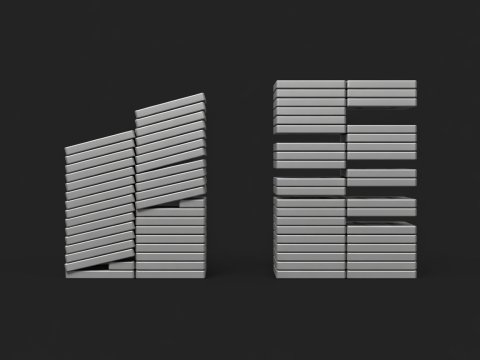
Cut underneath the top canopy or through subtle vertical point-cutting so the surface looks seamless while excess interior bulk is quietly lifted away.
Every haircut is a mixture of three geometric operations: one-length bluntness (0° elevation), graduation that stacks weight (1°–89° elevation), and layering that removes weight (90°–180° elevation). Knowing how these three forces interact with your strand profile guarantees a wearable shape.
Compare silhouettes ↓Cutting hair above the shoulders eliminates the downward pull of collar friction, allowing natural waves and curls to spring upward and giving fine hair an immediate appearance of doubled density. When Vidal Sassoon introduced the Five-Point Cut and the asymmetric Nancy Kwan bob in London during the 1960s, the breakthrough lay in internal beveling—cutting the underneath nape hairs fractionally shorter so the outer veil curves inward naturally without curling irons.
If you want a low-effort bob today, pay close attention to where the hemline hits your neck. A jawline or lip-line French bob highlights the cheekbones and clears coat collars completely, whereas a mid-neck or collarbone lob offers the safety net of fitting into a low claw clip during workouts.
Cut blunt at zero elevation with lightly polished ends for natural turn-under. Gives fine and medium hair rich, luxurious swing with almost zero styling time.
Builds a supportive wedge at the occipital bone, lifting flat crowns effortlessly. Ideal for straight to wavy hair that tends to droop at the back of the head.
Combines the crown movement of a short bob with a softly hugged nape and sideburn taper. Point-cutting keeps the edges feathery rather than helmet-like as it grows out.
Long hair without internal shaping often splits into two camps: fine hair hangs like heavy curtains that flatten at the crown, while thick wavy or curly hair expands into a dense pyramid at the bottom. Layering solves both challenges, provided the shortest layer is chosen with your daily styling habits in mind.
Paul McGregor’s 1971 shag haircut—famously worn by Jane Fonda in *Klute*—used crown-heavy short layers and feathered perimeter tapers to release natural wave without heat tools. By contrast, contemporary "butterfly" cuts pair chin-to-collarbone front layers with long back layers, creating a dramatic cascade that looks lush when styled with large rollers or a round brush, yet requires more effort on straight, flat hair than an air-dried shag.
Cut underneath the top canopy or through subtle vertical point-cutting so the surface looks seamless while excess interior bulk is quietly lifted away.

High-elevation crown layers encourage Type 2A–3B hair to scrunch into effortless texture. Best paired with air-drying cream or sea-salt mist.
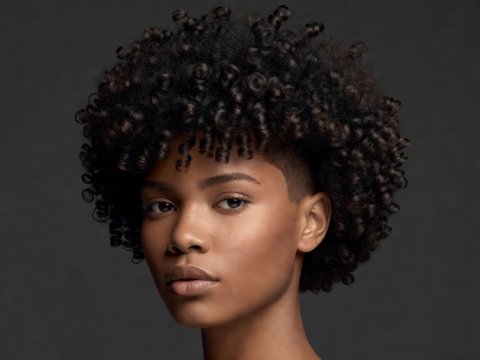
Uses rounded radial sections to maintain uniform length around the head while liberating root volume, preventing flat spots at the crown.
How the hair is severed matters as much as where it is cut. Use this reference guide to discuss cutting tools with your stylist based on your cuticle texture.
| Cutting Tool / Method | Cuticle Effect | Best Texture Match | When to Avoid |
|---|---|---|---|
| Blunt Straight Shears | Clean horizontal seal; maximum light reflection and end weight | All textures, especially Fine (1A–3A) | Thick, coarse hair needing airy tapered ends |
| Point Cutting & Slide Cutting | Bevels and softens the edge with solid blades; zero frayed cuticle | Wavy, Curly, Coarse (2A–4A) | Ultra-thin ends that already lack opacity |
| Straight Styling Razor | Slices strand at an elongated taper for wispy, lived-in movement | Straight to Wavy with smooth cuticles (1A–2B) | High-porosity curls, coarse frizz-prone strands, or bleached ends |
| Notched Thinning Shears | Removes bulk rapidly by cutting alternating strands short | Dense straight hair (1B–1C) in short barbered tapers | Curlyclumps (3A–4C) where short internal hairs disrupt coil grouping |
Cookies on this site Essential cookies keep this site working. Optional ones help us see what is useful. You can change your choice at any time. Cookie policy